


The Complete Guide to Sitemaps: Why They Matter for SEO
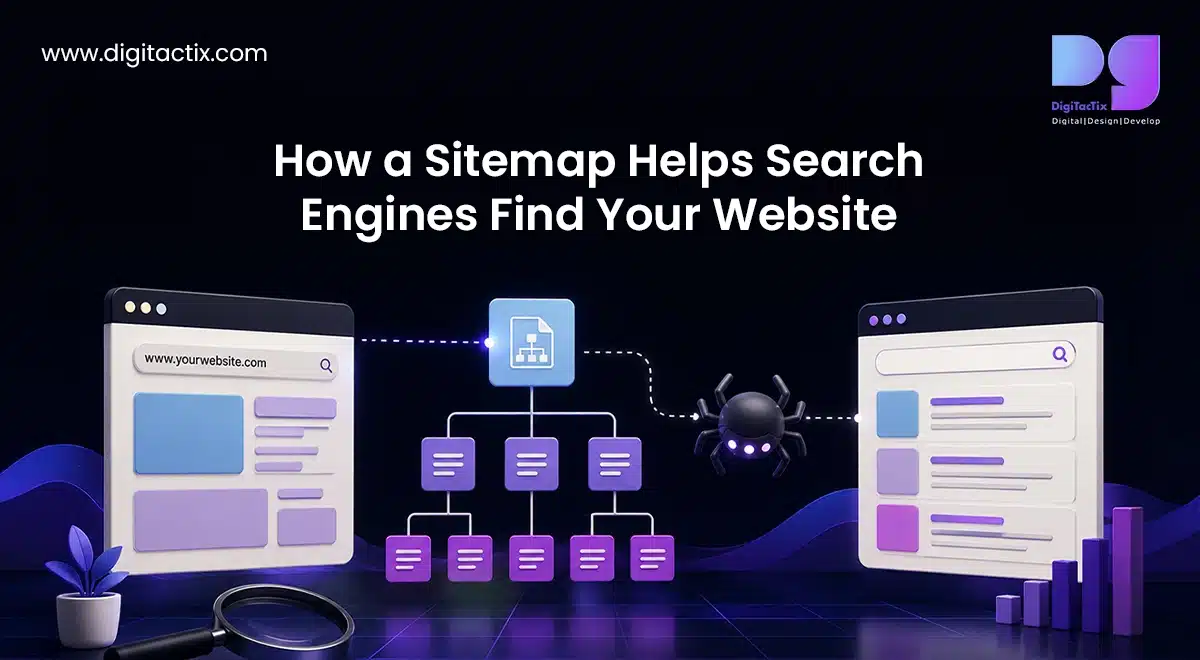
Imagine searching for one specific page among millions of books in a massive library. Without any guide, you could spend days, maybe months, just hunting for it. Now imagine having an index that tells you exactly what’s on every page. Suddenly, the search takes seconds instead of weeks.
A Sitemap works exactly like that. It gives search engines a structured overview of the pages and files a website considers important. This helps improve content discovery, support efficient crawling and help identify indexing problems.
Although a website sitemap does not directly guarantee higher rankings, it plays an important supporting role in technical SEO. Businesses can increase organic visibility by ensuring that search engines can easily find and understand their most important content.
SEO-Friendly Website Structure: Why It Matters
Search engines can more effectively explore, comprehend, and index your website with a well-thought-out, SEO-friendly website structure. Additionally, it facilitates visitors’ access to the information they want.
Consider your website to be a library. It becomes difficult to find anything if books are arranged haphazardly without labels or classifications. This also holds true for websites. For SEO purposes, a well-defined website structure guarantees that each page serves a function.
Beyond rankings, a well-designed structure enhances user experience, lowers bounce rates, and motivates users to see further pages.
So what exactly is a sitemap?
Sitemap is a file or webpage that lists important URLs on a website. It helps search engines and, in some cases, visitors understand how the site is organised.
The two main types are:
- XML sitemap: A machine-readable file created primarily for search-engine crawlers.
- HTML sitemap: A user-facing webpage that provides organised links to important areas of a website.
An XML sitemap can also communicate information such as when a page was last significantly updated. Some special extensions even provide search engines with additional details about images, videos, news articles and alternate-language pages.
Many content management systems can generate sitemaps automatically. However, an automatically created file is not necessarily accurate or strategically useful. It may include duplicate, redirected or low-value URLs while excluding pages that should be easier for search engines to discover.
Why Is a Sitemap Important for SEO?
Simply put: it helps search engines discover important pages
Search engines usually find webpages by following links. New, deeply nested or poorly connected pages may take longer to discover.
A sitemap for SEO gives crawlers another route to important URLs. It is especially valuable for:
- New websites with few external links
- Large or complex websites
- Ecommerce stores with changing product inventories
- Websites with extensive image or video content
- Pages that are difficult to reach through navigation
It complements internal linking and website navigation, creating a clearer path for search engines and visitors.
It supports search engine indexing
Search engines need to discover a page before considering it for indexing. An SEO sitemap presents important URLs in a structured format, making discovery more efficient.
However, a sitemap is a signal, not a guarantee. Duplicate content, redirects, access restrictions and canonical issues may still prevent a page from being indexed.
It highlights technical issues
A properly managed XML sitemap can help SEO professionals identify broken, redirected, blocked or unintentionally excluded pages.
Resolving these issues matters because a valuable service, product or content page cannot attract organic traffic if search engines cannot find or index it. Reviewing the website sitemap also ensures it reflects the pages a business wants customers to discover.
It supports website growth and change
Websites evolve as pages are published, removed, redirected or reorganised. An accurate Sitemap helps search engines keep track of these changes.
This is particularly important for ecommerce stores, publishers, multilingual websites and businesses that regularly create new landing pages.
Does Every Website Need a Sitemap?
A small website with strong internal linking may still be discovered and indexed without a Sitemap. However, relying entirely on search engines to find every important page can create an avoidable risk.
A Sitemap is particularly worthwhile when a website is new, growing, frequently updated or structurally complex. Even for smaller business websites, it provides a clearer foundation for monitoring technical SEO and future expansion.
The more important organic search is to a business, the stronger the case for having an accurate and professionally maintained Sitemap.
Strengthen Your Website’s SEO with Digitactix
Digitactix brings strategy, creativity and technology together to help brands build a stronger digital presence. From SEO, content and social media marketing to branding, paid campaigns and web development, our services are designed to work together and produce meaningful, measurable results.
As an SEO agency in Mumbai, we combine technical expertise with creative thinking to develop solutions shaped around each brand’s goals, audience and growth opportunities.
Looking for a digital partner who can turn your business objectives into an effective growth strategy? Reach out to us for a discovery call and explore how Digitactix can create lasting value for your business.
Faq's
A sitemap is a list of important website URLs that helps search engines discover and crawl content. XML is the format most commonly associated with SEO.
It supports content discovery, efficient crawling and technical monitoring. It is especially helpful for new, large, complex or frequently updated websites.
An XML sitemap is primarily for search engines, while an HTML sitemap helps visitors navigate a website. The two formats serve different but complementary purposes.
A sitemap can be submitted through Google Search Console and referenced in a website’s technical configuration. An SEO agency can manage the submission, verify that the file is processed correctly and address reported issues.
Yes. Search engines can discover and rank a well-linked website without one. However, a sitemap improves content discovery and improves search engine indexing.