


SEO-Friendly Website Structure: How to Build a Website That Ranks
You’ve invested in a visually appealing website, released high-quality content, and even launched SEO campaigns. However, your rankings remain erratic, and key pages still struggle to appear on Google. The structure of your website is often the issue, not the content.
Search engines consider more than just a page’s content. They also evaluate the overall coherence of the structure, how easy it is for visitors to browse the website, and the connections between pages. Even well-optimized content may fall short of its full ranking potential without a robust, SEO-friendly website structure.
In this blog, we’ll go over how to create an SEO-friendly website structure, why it’s important for users and search engines, and the essential components that improve user experience and help websites rank higher.
SEO-Friendly Website Structure: Why It Matters
Search engines can more effectively explore, comprehend, and index your website with a well-thought-out, SEO-friendly website structure. Additionally, it facilitates visitors’ access to the information they want.
Consider your website to be a library. It becomes difficult to find anything if books are arranged haphazardly without labels or classifications. This also holds true for websites. For SEO purposes, a well-defined website structure guarantees that each page serves a function.
Beyond rankings, a well-designed structure enhances user experience, lowers bounce rates, and motivates users to see further pages.
SEO-Friendly Website Structure: Build a Clear Website Hierarchy
Every successful website starts with a simple and logical hierarchy.
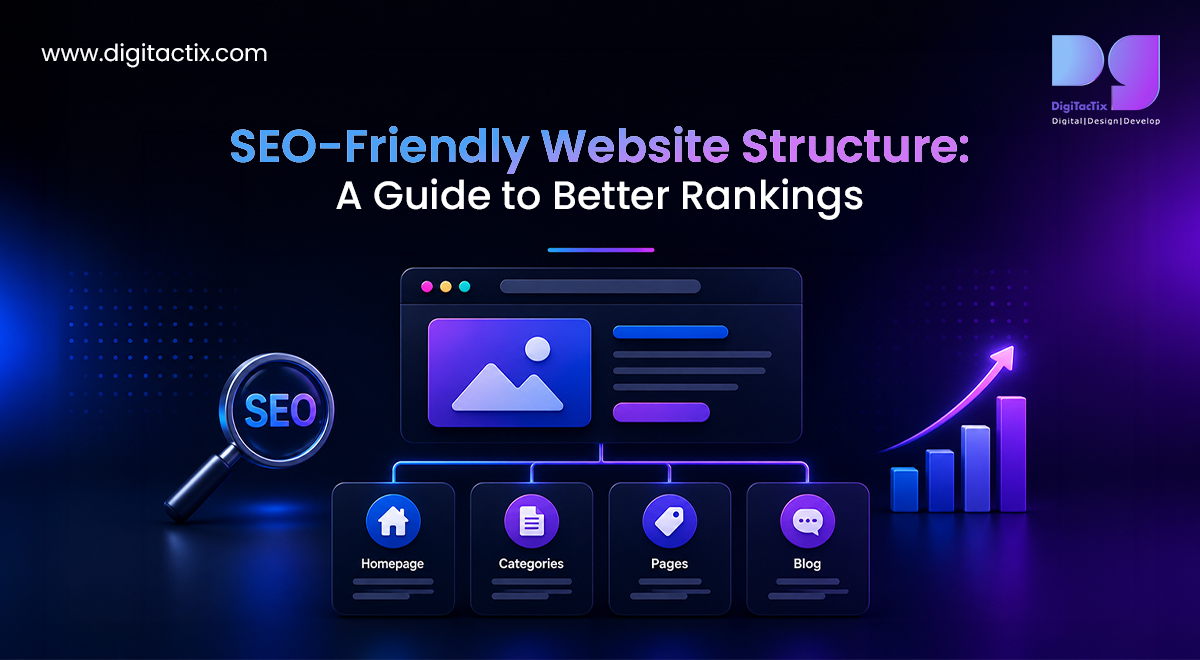
The main categories on your site should lead to specific pages and subcategories. This results in a well-structured SEO website architecture that is simple for search engines and users to follow.
For example:
- Homepage
- Services
- Industries
- About Us
- Blog
- Category
- Individual Blog
Keeping important pages within a few clicks from the homepage also improves crawlability and ensures valuable pages receive greater visibility.
SEO-Friendly Website Structure: Strengthen Your Internal Linking Strategy
The internal linking structure is one of the most neglected SEO elements.
Internal links spread authority throughout your website and help search engines find relevant information. More significantly, they direct visitors to relevant sites, boosting engagement and time spent on your website.
Linking to relevant blogs on keyword research or on-page optimization, for instance, strengthens the content ecosystem when you write about technical SEO.
In addition to raising ranks, a well-considered internal linking structure enhances the browsing experience.
Prioritize Navigation That Makes Sense
Users are often irritated by confusing menus and complex navigation before they even reach your content.
Simplicity is a key component of effective website navigation SEO. Whether they are searching for resources, goods, or services, visitors should know where to go right away.
Some best practices include:
- Keep navigation labels clear and descriptive.
- Limit unnecessary menu items.
- Use breadcrumb navigation where appropriate.
- Maintain consistent navigation across all pages.
Simple navigation helps both visitors and search engines move through your website effortlessly.
Design with SEO in Mind
While having a visually appealing website is crucial, performance should never be sacrificed for aesthetics.
A successful SEO-friendly website design strikes a balance between usability and aesthetic appeal. Stronger SEO performance is influenced by legible design, mobile friendliness, fast-loading websites, and clear URLs.
Similarly, refrain from building orphan pages that are disconnected from the rest of your website. Logical navigation and internal connections should make all significant pages accessible.
Your website becomes more user-friendly and simpler to rank when design and SEO work together.
Common Website Structure Mistakes to Avoid
Even well-designed websites can face SEO issues because of structural problems.
Some common mistakes include:
- Deep page hierarchies with too many clicks
- Broken internal links
- Duplicate content across multiple URLs
- Poor category organization
- Inconsistent navigation
- Weak website navigation SEO
Regular website audits help identify these issues before they impact rankings.
Build an SEO-Friendly Website Structure That Lasts
It takes more than just page organization to create an SEO-friendly website structure. It involves building a website that is both user-friendly and easy for search engines to index. Businesses build a strong foundation for long-term organic growth by focusing on a logical website structure for SEO, a robust SEO website architecture, an efficient internal linking structure, intuitive website navigation, and careful SEO-friendly website design.
We at Digitactix help companies create websites that are both aesthetically pleasing and functional. As the best SEO company in Mumbai, we build websites that increase exposure, enhance user experience, and provide long-term search growth by combining technical SEO, strategic site architecture, and user-focused optimization.
Faq's
An SEO-friendly website structure organizes pages in a clear, logical hierarchy that makes navigation easy for users and search engines. It includes simple URLs, internal linking, well-organized categories, and optimized page architecture, helping search engines crawl, index, and rank your website more effectively.
An SEO-friendly website structure improves crawlability, indexing, and user experience. When pages are logically organized and connected through internal links, search engines understand your content better. This can improve keyword rankings, increase organic traffic, and help visitors quickly find relevant information.
An SEO-friendly website structure for service pages should include a keyword-focused title, clear headings, detailed service descriptions, relevant internal links, FAQs, and strong calls to action. Optimized URLs, fast loading speed, and schema markup also help improve search visibility and user experience.