
How Content Repurposing Extends the Life of High-Performing Ideas
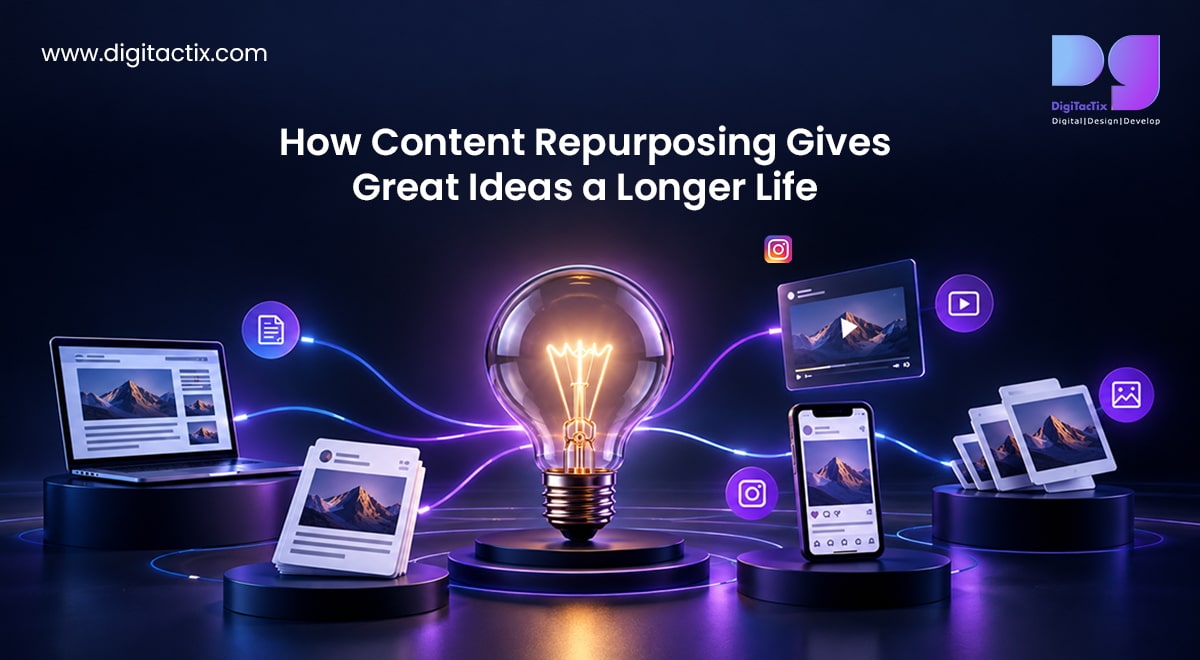
What if one great piece of content could keep working for your brand long after it was first published? Creating quality content takes time, research, and effort, so using it only once can limit its true value. This is where content repurposing helps. It allows businesses to take a successful idea and turn it into different formats for different platforms and audiences.
Instead of starting from scratch every time, brands can use a smart content repurposing strategy to extend the life of content that already performs well. As a result, they can save time, stay consistent, reach more people, and get more value from every strong idea.
In this blog, we will explore how content repurposing works, how to identify content worth reusing, and how a multi-format content strategy can support better reach, engagement, and SEO.
Why Does Content Repurposing Make Content Work Harder?
People like to consume content in different ways. Some like to read blogs, while others prefer watching short videos or looking at carousels and infographics. Some may also enjoy listening to podcasts. Therefore, if a brand shares an idea in only one format, many people may miss it.
With content repurposing, businesses can transform one valuable idea into several useful pieces of content. For example, a detailed blog can become a LinkedIn carousel, an Instagram Reel, an email newsletter, or even a short video.
This approach also makes content creation more efficient. Instead of searching for a completely new topic every day, businesses can focus on ideas that have already received good engagement.
A strong multi-format content strategy can help brands:
- Reach audiences across different platforms.
- Save time on researching new content ideas.
- Keep important messages visible for longer.
- Maintain consistent communication across channels.
- Get more value from successful content.
Repurposing isn’t simply about repeating content. Instead, it means adapting valuable ideas to different audiences and platforms.
How to Identify Content Worth Repurposing
Not every piece of content needs to be reused. Therefore, businesses should first identify the content that has already performed well.
Website analytics, social media insights, search rankings, engagement rates, and conversions can help identify strong-performing content. For instance, a blog that consistently brings organic traffic may be suitable for repurposing high-performing content into videos, infographics, or social posts.
Businesses can look for:
- Blogs receiving steady organic traffic.
- Social posts with high engagement or shares.
- Videos with strong watch time.
- Frequently asked customer questions.
- Evergreen topics that remain useful over time.
- Content that generated leads or conversions.
Once you’ve identified these pieces, the next step is to decide which new format will add the most value.
For example, businesses can repurpose blog content into a series of smaller social posts rather than simply reposting the same article. As a result, the original idea reaches people who may never have visited the blog.
Content Repurposing Across Different Platforms
Each digital platform works differently. Therefore, simply copying the same content everywhere may not produce strong results. Effective social media content repurposing requires businesses to change the format, length, and presentation based on where the audience sees it.
For example, a long blog can provide several short LinkedIn posts. Similarly, key statistics from the blog can become an infographic, while useful tips can turn into an Instagram carousel.
A webinar can also become short video clips, social posts, a blog article, and email content. Likewise, a detailed case study can become a short success story for social media.
This type of content recycling keeps useful information active without making the brand feel repetitive. However, every new version should offer something slightly different. A new headline, visual, example, or point of view can make the content feel fresh.
Therefore, successful content repurposing is less about copying and more about reshaping an idea for the right platform.
How Content Repurposing Supports SEO
Repurposing can also support a wider SEO strategy. When businesses update and expand useful content, they can improve its relevance and help users find answers in different ways.
For example, an older blog may still contain valuable information but need updated statistics, examples, or keywords. Refreshing it lets businesses keep the page useful instead of creating another article on almost the same topic.
Businesses can also create more content around one main topic. For example, one detailed blog can lead to smaller articles that answer related questions. These pages can link to each other, which helps readers find more useful information and also helps search engines understand the topic better.
However, businesses should avoid publishing duplicate content across multiple pages. Instead, every repurposed piece should have its own purpose and provide useful information.
As a result, a thoughtful content repurposing strategy can support visibility while helping brands build stronger authority around important topics.
Getting More Value From Every Good Idea
Great content should not disappear after one post. Instead, businesses should regularly review their best-performing content and look for opportunities to extend its life.
A successful article today may become a video next week and a social media carousel a month later. The same topic can also support emails, presentations, FAQs, and website content.
Therefore, content repurposing helps businesses build a more sustainable content process. It reduces the pressure to constantly create something new while allowing good ideas to reach more people.
Most importantly, the goal should always remain quality. Businesses should repurpose content because the idea is useful, not simply because they need more posts.
Creating More Value From Content at Digitactix
At Digitactix, we believe strong ideas should create value beyond a single post or platform. So we build content strategies that help brands use their best ideas more effectively.
Through our content writing services, we identify topics that connect with audiences and explore how they can work across blogs, social media, videos, emails, and other digital channels. At the same time, we adapt every format to suit the platform rather than simply repeating the original content.
Through thoughtful content repurposing, we help brands maintain a consistent presence while making better use of the content they already have. Our aim is simple: create strong ideas once, develop them intelligently, and help them continue delivering value across the digital journey.
Content repurposing means taking existing content and turning it into a new format. For example, a blog can become a video, carousel, infographic, email, or social media post. It helps brands use the same valuable idea in different ways and reach more people across different platforms.
Content repurposing helps businesses save time, reach more people, and get more value from their best ideas. It also helps brands stay active across different platforms without creating everything from scratch. In addition, it can increase engagement and keep useful content relevant for a longer time.
Brands should focus on content that has already performed well or remains useful over time. Content repurposing works well for popular blogs, guides, videos, webinars, case studies, FAQs, and social media posts. Content that receives good traffic, engagement, shares, or leads is often a good choice for repurposing.
Content repurposing can improve content marketing ROI by getting more value from content that has already been created. Instead of spending time and money on new ideas every time, businesses can turn successful content into different formats. This can increase reach, engagement, website traffic, and leads without starting from scratch.
Content marketing services can identify which content is performing well and find new ways to use it. Through content repurposing, they can turn blogs into videos, social posts, emails, infographics, and other formats. They also make sure each version fits the platform, audience, and overall marketing goals.