
How Reach and Frequency Planning Prevents Audience Fatigue
A single sighting of an advertisement can create awareness; a few viewings can boost recall, but seeing the same ad repeatedly can have the opposite effect.
This is where reach and frequency planning become important. For brands that carry out paid media across search, social, display, video, and programmatic channels, the problem is not just about getting in front of more people; it is about controlling how many times the same audience sees the same message.
If people are exposed to it for too short a time, the campaign might never make an impact; but if they are exposed to it for too long, audience fatigue will start to occur. This can lead to reduced engagement, a weaker response, increasing costs, and, in the end, annoyance towards the brand.
Marketing managers, media planners, and members of the performance teams all aim to achieve a balance. This article explains how smart decisions about reach and frequency can protect campaign performance without sacrificing visibility.
What Is Reach and Frequency Planning?
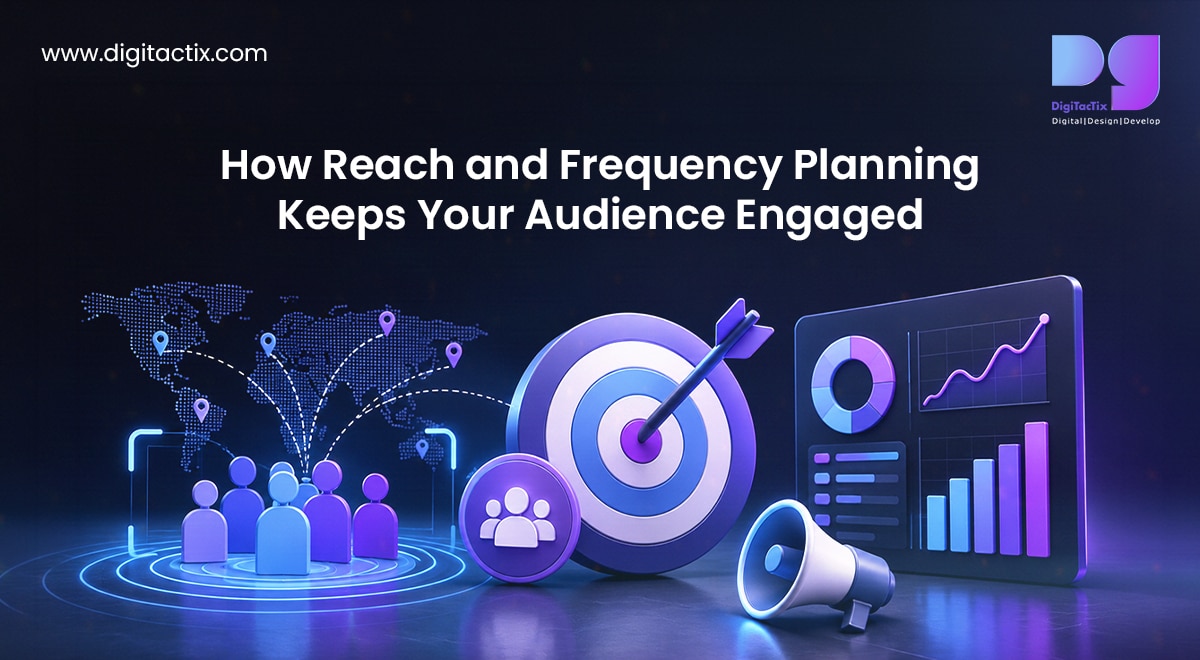
Reach shows how many different people have seen your campaign, while Frequency indicates the average number of times each person has seen it.
Use the two metrics together.
A campaign with high Campaign reach but very low frequency may fail to build enough familiarity. On the other hand, a campaign with low reach and very high advertising frequency may keep hitting the same small group until performance drops.
Which is why media campaign planning should not regard reach and frequency as separate reporting figures; instead, they should be used in conjunction when deciding how widely a campaign should be spread and how often an audience needs to see the message before further impressions cease to be of value.
How Audience Fatigue Starts
Audience fatigue happens when people see the same ad, message, or creative too often.
Initially, repetition can be of use since people might not notice an advertisement the first time, and it is only with repeated exposure that they are able to remember the brand. However, beyond a particular stage, the same creative begins to seem familiar in an undesirable way.
Typical signs are a drop in click-through rates, reduced engagement, increased cost per result, and falling conversion rates even if the amount spent stays the same.
This is where Ad frequency optimisation becomes valuable. Instead of letting platforms serve impressions without limits, marketers can monitor how performance changes as frequency rises.
There is no single ideal number; the right frequency depends on the campaign objective, the channel used, audience size, and the range of creatives.
Reach and Frequency Planning Helps You Avoid Overexposure
Good planning begins before the campaign goes live.
Begin by making an estimate of the potential audience and the anticipated media budget; if the audience is small but the budget is high, frequency can then rise rapidly. In such a case, increasing the spending won’t necessarily result in greater meaningful campaign reach.
It may simply create more impressions among people who have already seen the campaign.
A stronger Audience reach strategy considers how many relevant people you can realistically reach and allocates budget accordingly.
This matters most for remarketing campaigns, account-based marketing, and highly specific B2B targeting, where audience groups can be much smaller than in general consumer campaigns.
Sometimes the right decision is not to spend more. Instead, spread exposure more intelligently.
Use Ad Frequency Optimisation With Creative Rotation
Frequency becomes a problem not just because someone sees your brand several times. The bigger issue is often seeing the exact same creative repeatedly.
Creative rotation can reduce that feeling.
For instance, a campaign could address the problem in one advertisement, explain the benefit in another, provide social proof in a third, and then use a stronger conversion message afterward.
This turns repeated exposure into a sequence, not repetition.
Strong Ad frequency optimisation should therefore work alongside creative planning. When performance starts falling at higher frequency levels, marketers can refresh visuals, copy, formats, or messages instead of immediately increasing the budget.
Good Media exposure planning asks not only, “How often should they see us?” but also, “What should they see next?”
That small shift can make campaigns feel much more intentional.
Reach and Frequency Planning Changes by Campaign Objective
Not every campaign needs the same exposure pattern.
Campaigns designed to build brand awareness usually require wide reach and sufficient repetition to build recognition, while conversion campaigns can focus on smaller, more intent-driven audiences and allow more frequent exposure.
Launched campaigns may need greater visibility over a short time, whereas continuously running campaigns require more precise frequency control over longer periods.
This is why you should always view advertising frequency in context.
A user who sees an ad five times over two months is different from someone who sees it five times in a single afternoon.
Effective Media campaign planning considers both the number of impressions and the period over which those impressions occur.
Measure Reach, Frequency, and Performance Together
Reach and frequency figures are far more useful when they are linked to real campaign results.
Monitor the changes in click-through rates, conversions, cost per acquisition, engagement, and video completion rates as the frequency increases.
If engagement remains steady, further exposure could still be beneficial. But if performance drops suddenly, the audience might need new creative ideas or a break.
This approach makes Media exposure planning more evidence-based.
This also enables marketers to tell the difference between a poor campaign and a fatigued audience. In some cases, the offer is adequate; the same individuals have just seen it too often.
Build a Smarter Audience Reach Strategy
A strong Audience reach strategy also looks across channels.
A single customer might come across your ads on Instagram, YouTube, websites, and other digital platforms. Total exposure can, however, become considerably greater than the various dashboards indicate if each platform is managed in isolation.
Where possible, assess reach and frequency at the campaign level as a whole.
This helps Media planning services focus on the complete customer experience rather than optimising one platform at a time.
We don’t want to remove repetition, since repetition belongs in advertising; we want to ensure each additional instance of the message justifies itself.
How Digitactix Makes Reach and Frequency Planning Work Harder
At Digitactix, we approach reach and frequency planning as part of the wider media strategy, not simply as a reporting exercise.
Through our Media planning services, we look at audience size, campaign objectives, platforms, budgets, creative performance, and Advertising frequency together. This helps us identify when a campaign needs more reach, when an audience needs fresh creative, and when additional impressions are unlikely to improve results.
We also use media campaign planning to create a more balanced experience across channels, helping brands stay visible without overwhelming the people they want to reach.
Because effective advertising is not about being seen everywhere, all the time. It is about being seen enough to be remembered, and not so often that people start wishing they could forget you.
Frequency shows how often the same person sees an ad during a campaign. In Reach and frequency planning, it helps marketers balance repetition with audience comfort. Enough exposure can improve recall, but too much can cause fatigue. Tracking frequency helps teams decide when to refresh creative, reduce spend, or expand reach.
Audience fatigue happens when people see the same ad or message too many times and begin to ignore it or respond less positively. Reach and frequency planning helps reduce this problem by monitoring exposure levels, rotating creatives, and adjusting budgets so campaigns stay visible without becoming repetitive or irritating.
Reach refers to the number of unique people who see an ad, while frequency shows how often each person sees it on average. Reach and frequency planning brings both together so marketers can expand visibility while controlling repetition, helping campaigns build awareness without overexposing the same audience.
Reach and frequency planning helps prevent wasted spend by showing whether a campaign is reaching new people or repeatedly serving ads to the same audience. This lets marketers allocate budgets more efficiently, improve coverage, manage exposure levels, and avoid paying for impressions unlikely to add meaningful value.
Media planning services improve performance by aligning audience targeting, channels, budgets, creatives, and campaign objectives. Reach and frequency planning is a key part of this process because it helps teams control exposure, expand relevant reach, reduce fatigue, and make smarter decisions based on how audiences respond over time.