
Google Ads vs Meta Ads: Which Is Better for Your Business?
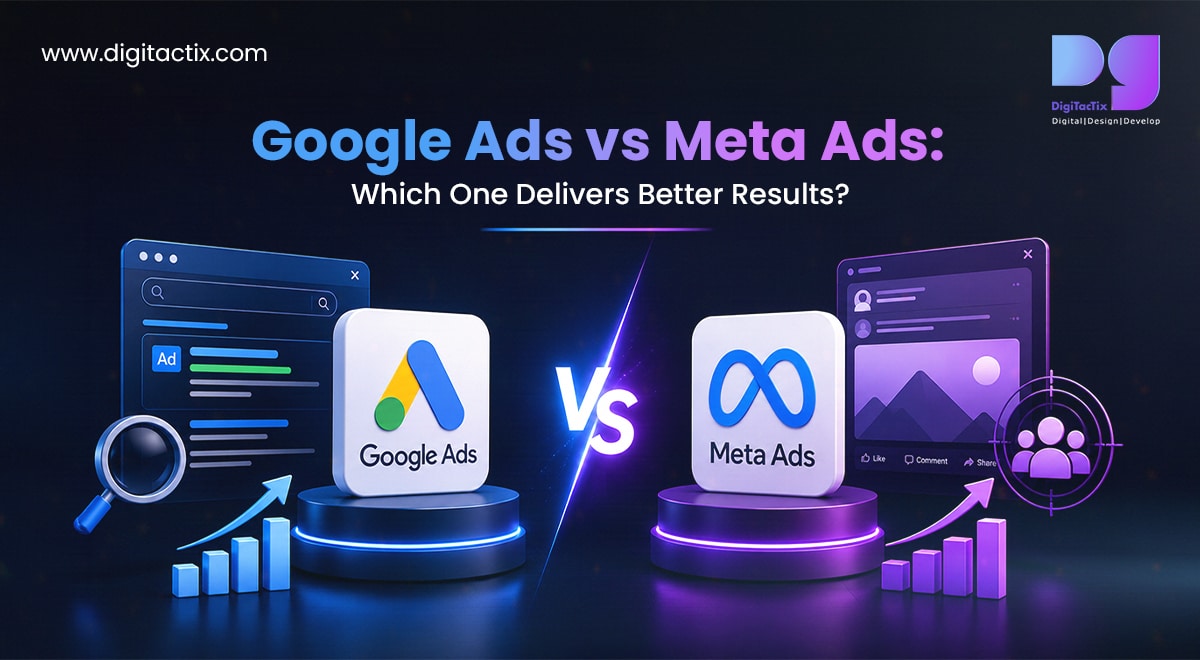
You’re ready to invest in digital advertising, but one question remains: which will deliver better results, Google Ads vs Meta Ads?
It’s a valid question. Many organizations enter paid advertising expecting fast results, only to learn that the platform they chose does not align with their target demographic or company objectives. Some spend a lot of money on Google Ads in hopes of driving conversions, while others invest in Meta Ads without understanding how people behave on social media. What was the result? Wasted funds, low-quality leads, and ineffective efforts.
The fact is that no single solution works for everyone. Both platforms are powerful, yet they serve distinct objectives.
In this blog, we’ll compare Google Ads vs Meta Ads, explain where each platform performs best, and help you choose the right strategy for your business.
Google Ads vs Meta Ads: Understanding the Core Difference
The main distinction between Google Ads vs Meta Ads is user intent.
People use Google Ads to actively seek a product, service, or solution. They already have a need; you just need to emerge at the correct time. That’s why firms seeking rapid leads often use Google PPC advertising.
Meta Ads, on the other hand, are geared for discovery. Whether you’re using Facebook Ads or Instagram Ads, you’re targeting individuals based on their interests, demographics, and online activity before they start looking.
In simple terms:
- Google Ads capture existing demand.
- Meta Ads create new demand.
Knowing this difference is the first step toward building a successful performance marketing strategy.
Google Ads vs Meta Ads: When Should You Choose Google Ads?
If your consumers are already searching for what you offer, Google Ads can deliver faster results.
For example, if someone searches for “best digital marketing agency” or “SEO services near me,” your company may show precisely when that purchasing intent arises.
Google Ads work particularly well for:
- Service-based businesses
- Local businesses
- Healthcare providers
- Real estate companies
- B2B businesses
- High-intent lead generation
Combined with strong landing pages and the right PPC advertising strategy, Google helps convert searches into inquiries.
Google Ads vs Meta Ads: When Do Meta Ads Perform Better?
Not every customer wakes up searching for your business.
Sometimes people have to discover your brand first. Meta Ads are very effective in this regard.
Businesses can use Facebook and Instagram Ads to introduce items, raise awareness, and nurture new consumers with compelling graphics and stories.
Meta Ads are especially effective for:
- E-commerce brands
- Fashion and lifestyle businesses
- Restaurants and cafés
- Fitness brands
- D2C companies
- Product launches
If your goal is to influence buying decisions before customers begin searching, Meta provides a significant advantage.
Can You Use Both Platforms Together?
Absolutely, and in many cases, that’s the smartest approach.
Instead of debating Google Ads vs Meta Ads, consider how each platform supports different stages of the customer journey.
For example:
- A customer first discovers your brand through Instagram Ads.
- They later see a remarketing campaign on Facebook Ads.
- Finally, they search your company on Google and convert through Google Ads.
This full-funnel strategy provides several touchpoints, increasing the effectiveness of your paid advertising and enhancing overall campaign success.
Successful performance marketing isn’t about picking one platform over another; it’s about understanding when each platform should do the hard work.
How to Choose the Right Platform for Your Business
The right decision depends on your objectives.
Choose Google Ads if you want:
- High-intent leads
- Immediate enquiries
- Search-based conversions
- Local customer acquisition
Choose Meta Ads if you want:
- Brand awareness
- Audience building
- Product discovery
- Visual storytelling
- Customer engagement
If your business wants both visibility and conversions, combining the strengths of Google Ads and Meta Ads often delivers the best long-term results.
Drive Better Leads with an Integrated Google and Meta Ads Strategy
The discussion between Google Ads and Meta Ads isn’t about picking a winner; it’s about finding the best match for your company objectives. While Google Ads allow you to capture current demand through search, Meta Ads, such as Facebook Ads and Instagram Ads, help build demand by getting your brand in front of the appropriate people. Together, they provide a powerful performance marketing approach that drives growth across all stages of the client experience.
Digitactix helps organizations create data-driven paid advertising programs that provide demonstrable outcomes. Whether you’re looking for a trusted Facebook ads agency, planning high-performing Google Ads campaigns, or searching for reliable search engine marketing services in mumbai, our team creates strategies tailored to your business objectives, helping you attract better leads, maximize ROI, and scale with confidence.
Turn LinkedIn Conversations Into Business Growth
Winning on LinkedIn is about building meaningful relationships, not just publishing more. A successful LinkedIn marketing plan for B2B companies involves great content, genuine engagement, and a long-term strategy built on trust rather than quick wins. Over time, this results in increased brand authority, improved connections, and more qualified business prospects.
Digitactix helps organizations create scalable LinkedIn development plans that go beyond content calendars. As a reputable LinkedIn marketing agency, we use strategy, content, SEO, and audience data to help B2B businesses reach the right decision-makers, generate high-quality leads, and make a long-term impact.
Faq's
Personalization, predictive analytics, and intelligent automation will propel digital marketing forward. AI-Powered Digital Marketing Services enable organizations to analyze customer behavior, deliver relevant experiences, and optimize campaigns in real time. Businesses that implement AI early will be better positioned to boost engagement, increase conversions, and remain ahead of the competition.
Automation will make repetitive marketing jobs easier, such as campaign management, consumer segmentation, email marketing, and performance reporting. AI-Driven Digital Marketing Services enable organizations to make quicker decisions based on real-time data, while marketing teams can focus on innovation, strategy, and building deeper customer connections to achieve long-term success.
Brands should prepare by investing in high-quality content, first-party data, AI-powered analytics, and customer-centric experiences. Partnering with suppliers of AI-Driven Digital Marketing Services enables organizations to adopt innovative technologies, optimize campaigns across channels, and remain competitive as AI reshapes how customers search, engage, and make purchasing choices.
AI is unlikely to totally replace conventional SEO, but it is influencing how search engines perceive and distribute information. AI-Driven Digital Marketing Services combine tried-and-true SEO methods with AI optimization, structured data, and intent-focused content to boost exposure in both traditional search results and AI-powered search experiences.