
What is Dark Social? The Hidden Power Of Dark Social In B2B Marketing
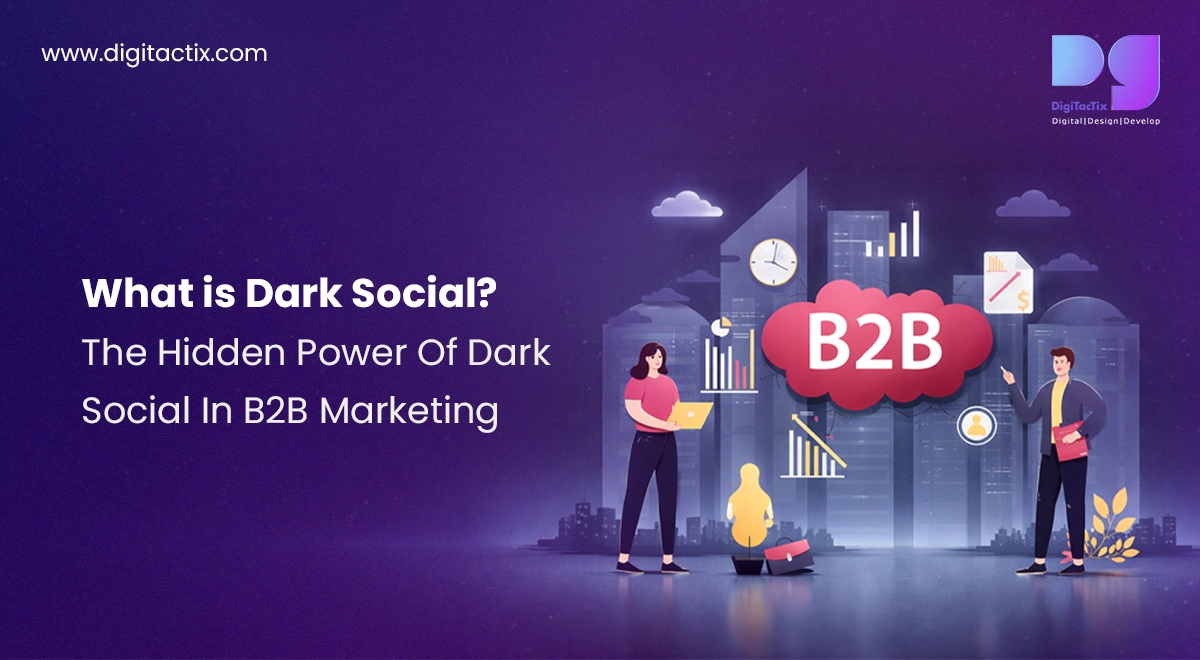
Marketers love dashboards. They spend hours studying numbers, charts, and tidy attribution paths to understand where people come from and what they do next. The funny thing is, some of the most meaningful conversations about your brand happen in places those dashboards can’t even peek into. People share links, forward screenshots, trade opinions, and pass along recommendations in private spaces that analytics tools simply can’t track. This entire invisible layer of online sharing is called dark social marketing, and it is slowly becoming one of the biggest forces shaping B2B communication today.
In a market like India, where relationships often carry more weight than cold outreach, ignoring dark social is almost like ignoring free inbound leads. Whether you run a small social media marketing agency or a full-scale digital marketing agency in Mumbai serving clients across the country, understanding how dark social really works can give you an advantage that polished analytics reports never will.
So, what exactly is dark social?
Dark social is basically all the sharing and talking that happens through private or semi-private channels. A few examples include:
- Private DMs
- Community groups
- Slack channels
- Signal, Telegram, and other encrypted apps
None of these spaces pass referral data. So when someone clicks a link from one of these places, it usually shows up as direct traffic. And that’s misleading.
Think of a simple situation. Someone sends a case study link to a colleague on WhatsApp. The colleague taps it and lands on your website. Analytics thinks they typed your URL manually, when in reality it came from WhatsApp marketing activity, which falls under dark social. This little gap in attribution is exactly why dark social matters so much in B2B.
Why dark social matters even more in B2B
B2B buying decisions rarely happen in a single moment. They usually involve research, comparisons, approvals, and conversations inside teams. This naturally pushes people to share things privately. Links, decks, reports, short clips, screenshots, posts that explain a point… it all gets circulated behind the scenes.
This private behaviour is what makes dark social such a strong channel. Here are a few reasons it dominates in B2B:
- High-intent peer conversations
People trust their colleagues more than ads. A CFO is much more likely to read an article shared by their finance manager than click on a random sponsored post.
- A culture of sharing expertise
Professionals constantly exchange industry insights, data, frameworks, and best practices. Most of this happens in private chats, not in comment sections.
- Longer buying cycles
With multiple stakeholders involved, the internal research journey passes through many private discussions.
- Low public engagement doesn’t mean low impact
Just because your post didn’t get likes doesn’t mean no one saw it. It might have been forwarded inside several team groups.
Dark social basically reminds us that visibility and actual influence are two very different things.
The types of dark social channels that shape B2B decisions
Not all private channels play the same role. But most of them influence the buying journey at some point.
- Messaging apps like WhatsApp, Telegram, Signal, and Slack
- Private communities on Discord, Slack, Reddit, or niche industry circles
- Email forwards, which are still surprisingly powerful
- DMs on LinkedIn, Instagram, or Facebook Messenger
These are the places where people actually speak freely and honestly.
Why analytics tools miss all of this
Analytics tools depend on UTMs, cookies, and clean attribution paths. Private platforms do not send any referral information to them. So traffic from these channels ends up looking like:
- Direct
- Unassigned
- None
This gives brands an incomplete picture.
If you ever see sudden spikes in direct traffic without a rise in branded search, chances are that a piece of your content travelled through dark social. Understanding this helps B2B teams recognise that their work may be driving impact even when dashboards look flat.
How dark social shapes B2B buying behaviour
Dark social does more than drive clicks. It builds trust, shapes opinions, and strengthens credibility in ways that public marketing cannot. Here’s how:
- It boosts trust
A colleague recommending something privately feels more authentic than a polished advertisement.
- It speeds up internal research
Sharing reports or frameworks helps teams move faster in decision making.
- It builds authority quietly
When your insights get passed around in private groups, your brand earns credibility even if no one tags you publicly.
- It strengthens word of mouth
Many B2B deals start with one simple question. “Has anyone used this company?”
If the answer circulates through private channels, a lead can appear out of nowhere.
Dark social is basically word of mouth that works at digital speed.
How agencies can use dark social for B2B clients
You cannot track dark social perfectly, but you can create conditions that make your content more likely to travel through it.
Here are a few smart approaches:
- Create content that people want to forward
Professionals usually share content that is actionable, sharp, informative, and easy to understand. Examples include playbooks, case studies, cheat sheets, or industry reports.
- Use formats that work well in private chats
Short PDFs, infographics, carousels, screenshots, and quick snippets tend to spread faster since they are easy to share on WhatsApp or Slack.
- Build small communities
WhatsApp groups, LinkedIn groups, Slack channels, or Telegram circles can become long term dark social hubs.
- Encourage peer sharing
Give people early access or exclusive reports. Host closed sessions or limited cohorts. People like sharing something that feels exclusive.
- Track signals indirectly
Look for indicators like:
- Direct traffic jumps
- More branded searches
- Deeper website engagement
- Returning visitor patterns
These patterns tell you that dark social is working even if you cannot see the exact source.
The future of dark social in B2B marketing
B2B audiences are becoming more private. They prefer smaller circles, curated communities, and recommendations from people they trust. Public engagement metrics are slowly losing their meaning while influence is shifting into closed networks.
In this environment, dark social marketing isn’t a problem. It is an opportunity waiting to be used.
Brands that understand how their content travels in these hidden spaces will outperform those who rely only on dashboards. And agencies that know how to use dark social will become vital partners for long term growth.
Conclusion
Dark social represents one of the most authentic and high intent discovery channels in B2B today. By embracing this hidden world of private messaging, small communities, peer exchanges, and exclusive content, brands can build deeper influence and speed up decision making.
The future belongs to companies that recognise that real impact doesn’t always show up in analytics tools. That is the quiet power of dark social marketing.
Contact Us.